Skip to content

What real estate agents don’t tell foreign buyers

Buying property in France is a dream that many people from abroad share. The countryside charm, the affordable prices in rural areas, the quality of life, all of it makes France one of the most sought-after real estate markets in the world for foreign buyers. And yet, for every successful purchase, there are buyers who arrive unprepared, sign contracts they did not fully understand, and end up facing costs, delays, or legal complications they never saw coming. Most of the time, the information gap starts with the agent.
Real estate agents in France play an important role in the buying process, but their interests are not always perfectly aligned with yours. Their commission depends on a completed sale, which means some details tend to stay in the background during visits and negotiations. This does not mean agents are dishonest. Most are professional and well-intentioned. But there are things that rarely come up unless you ask the right questions.
The commission is often paid by the buyer
One of the first things that surprises foreign buyers is who actually pays the real estate agent. In many countries, the seller covers the agent’s commission. In France, this is not necessarily the case. Agent fees are often included in the advertised price under the label “FAI” (Frais d’Agence Inclus), which means the buyer is effectively funding the commission. These fees typically range from 4% to 8% of the sale price, which on a 150,000 euro house can represent more than 10,000 euros.
What agents sometimes fail to highlight is that these fees are negotiable, and that buyers have the right to ask for a breakdown of exactly what they are paying. In some transactions, the commission is listed separately from the net seller price, and buyers only discover the full amount when they reach the signing stage.

The notaire is independent, and not your advisor

Many foreign buyers assume that the notaire, the legal professional who oversees all property transactions in France, is there to protect their interests. In reality, the notaire acts as an impartial public official whose job is to ensure the legality of the transaction, not to advise either party. They will conduct the required checks and register the deed, but they will not proactively flag potential problems with the property, raise issues with the neighbourhood, or suggest that you negotiate the price.
Buyers who want genuine legal guidance should consider hiring their own independent legal advisor or even a second notaire to represent them specifically. Two notaires can work on the same transaction, and the fees are shared rather than doubled. This is something agents rarely volunteer to explain.
The true condition of the property may be obscured
French law requires sellers to provide a dossier of technical diagnostics (DDT) covering everything from asbestos and lead to energy performance and termites. This document is legally mandatory and agents are required to share it. However, receiving a document and understanding its implications are two very different things. A property rated F or G on the energy performance scale (DPE) may look charming in photos, but it could require tens of thousands of euros in insulation and heating upgrades to meet future standards. Since 2023, the most energy-inefficient properties have become subject to increasingly strict regulations that may affect your ability to rent them out.
Agents will rarely walk you through what a poor DPE rating really means in practice. A foreign buyer who does not understand the French energy classification system can easily miss the significance of these ratings and inherit a renovation project far larger than expected.

The local market dynamics are rarely discussed
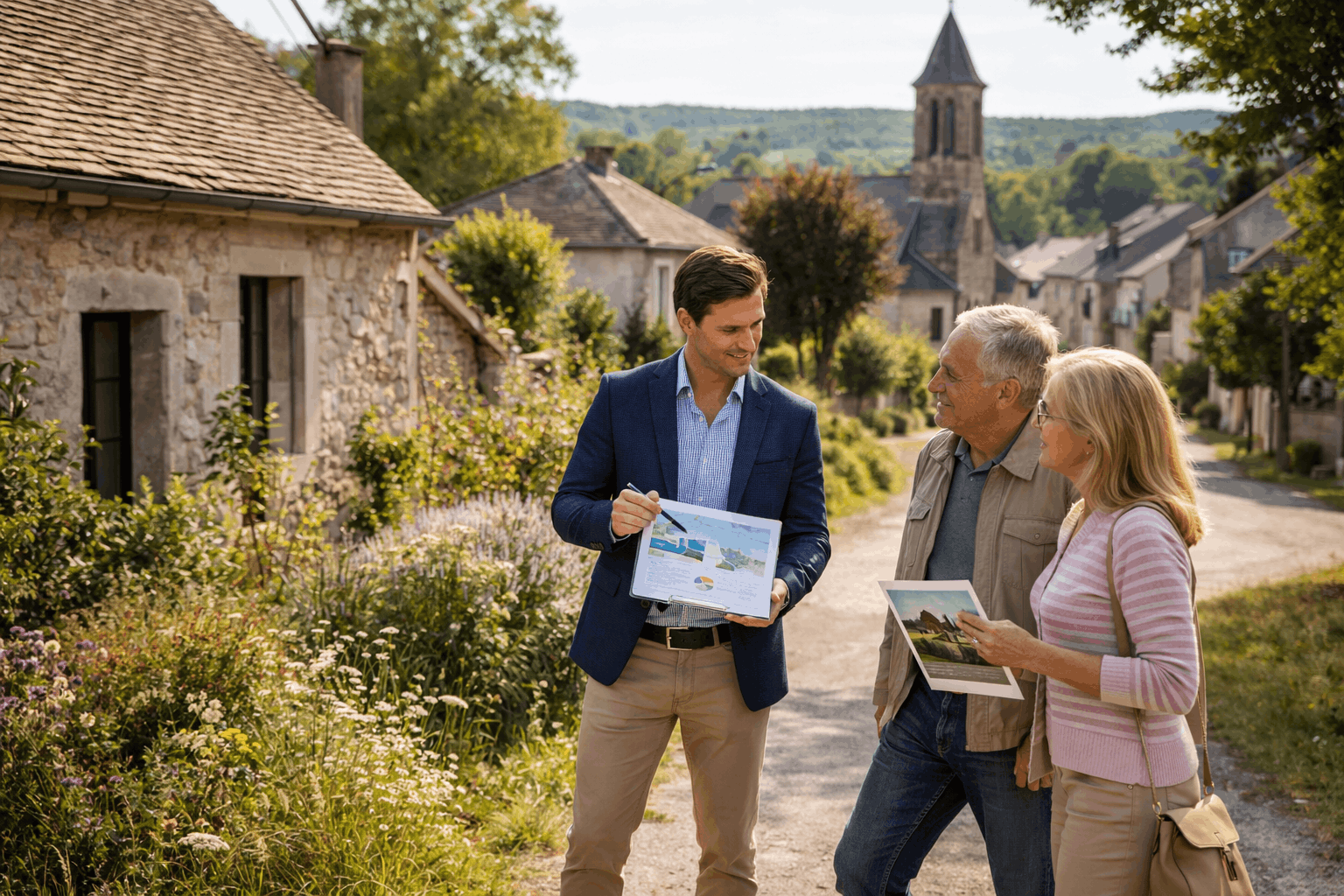
France is not one real estate market. It is hundreds of them. A village in Creuse operates under completely different conditions than a town in Brittany or a suburb of Bordeaux. Agents who are eager to sell a property will naturally present the local market in its best light. What they may not mention is that certain rural areas have seen population decline for decades, that resale can be challenging in very isolated locations, or that rental demand in some regions is essentially non-existent outside of summer months.
For a foreign buyer thinking about investment potential or future resale, understanding local demographic and economic trends is essential. This information exists and is publicly available, but it requires independent research. Asking an agent whether a property will be easy to resell is a bit like asking a car dealer whether you should buy the car. The answer is almost always encouraging.
The timeline is always optimistic
Agents typically present purchase timelines in their most favourable version. In practice, French property transactions routinely take longer than anticipated. Between the compromis de vente (the preliminary contract) and the acte authentique (the final deed), three months is considered standard, but delays caused by mortgage approvals, administrative checks, or inherited ownership complications can push that timeline significantly further.
For buyers who are coordinating international moves, relying on rental accommodation in the meantime, or synchronizing the sale of a property in their home country, an underestimated timeline can become a serious financial and logistical problem. Asking for a realistic assessment of how long the process has taken for similar properties in the area is a question worth raising before signing anything.

What you can do differently
The solution is not to distrust agents entirely, but to approach the process with a broader team around you. Working with an independent buying agent or property finder, consulting a bilingual notaire or lawyer early in the process, and conducting your own research on local tax rates, renovation costs, and energy obligations will put you in a much stronger position than relying solely on the information provided during a property visit.
France remains one of the most rewarding countries in the world to buy property in. The legal framework is solid, property rights are well protected, and the value on offer, particularly in rural areas, is genuinely remarkable. But the buying process rewards preparation, and the buyers who come out of it most satisfied are almost always the ones who asked more questions than the agent expected.