Skip to content

Galette des Rois: A delicious French tradition you’ll see everywhere in January
Every January in France, bakeries fill their windows with golden cakes topped with paper crowns. They are called Galette des Rois: literally "Kings’ Cake." Which may sound surprising in a country that famously abolished its monarchy more than two centuries ago. And yet, this royal-sounding cake remains one of the most beloved French traditions. Far from celebrating kings and queens, the Galette des Rois is about sharing, chance, and togetherness. Rooted in the Christian celebration of Epiphany, it has long outgrown its religious meaning to become a social ritual enjoyed by families, friends, colleagues, and even entire offices throughout January. In modern France, the only "king" or "queen" is the person lucky enough to find a small hidden charm inside the cake, and the crown they wear lasts just long enough to eat another slice.
What is Epiphany in France?
Epiphany, known in France as L’Épiphanie, is a Christian feast that commemorates the moment the Three Wise Men (les Rois mages) visited the infant Jesus, bringing gifts of gold, frankincense, and myrrh. In the Christian calendar, it symbolizes the revelation of Jesus to the world.
Traditionally, Epiphany falls on January 6th. However, in France, it is most commonly celebrated on the first Sunday of January. This practical shift allows families and friends to gather more easily, and it has helped the tradition remain widely observed, even among people who are not religious.
While Epiphany has clear religious origins, its modern celebration in France is largely cultural rather than spiritual. For many French people, it is less about attending church and more about sharing a Galette des Rois at home, at work, or with friends. Over time, the religious meaning has faded into the background, but the ritual itself has endured, transforming Epiphany into a uniquely French moment of conviviality at the start of the year.
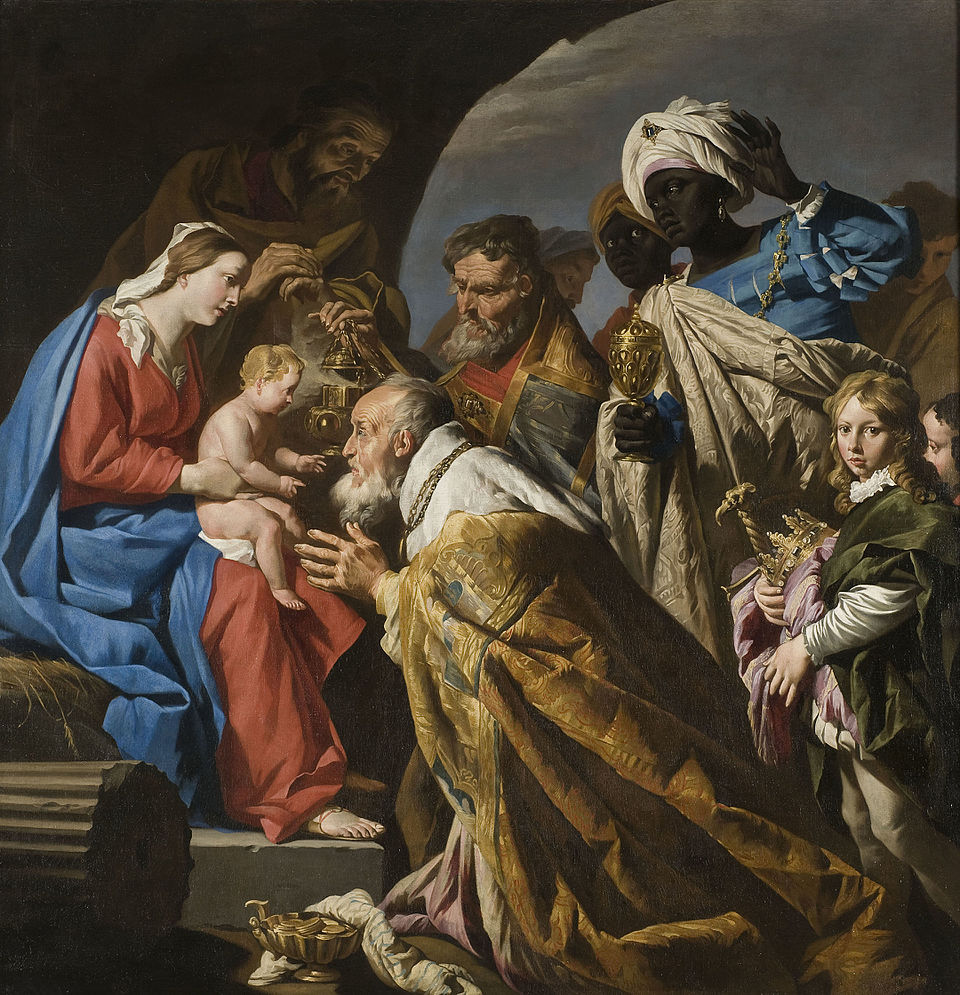
The Adoration of the Magi
What is the Galette des Rois?
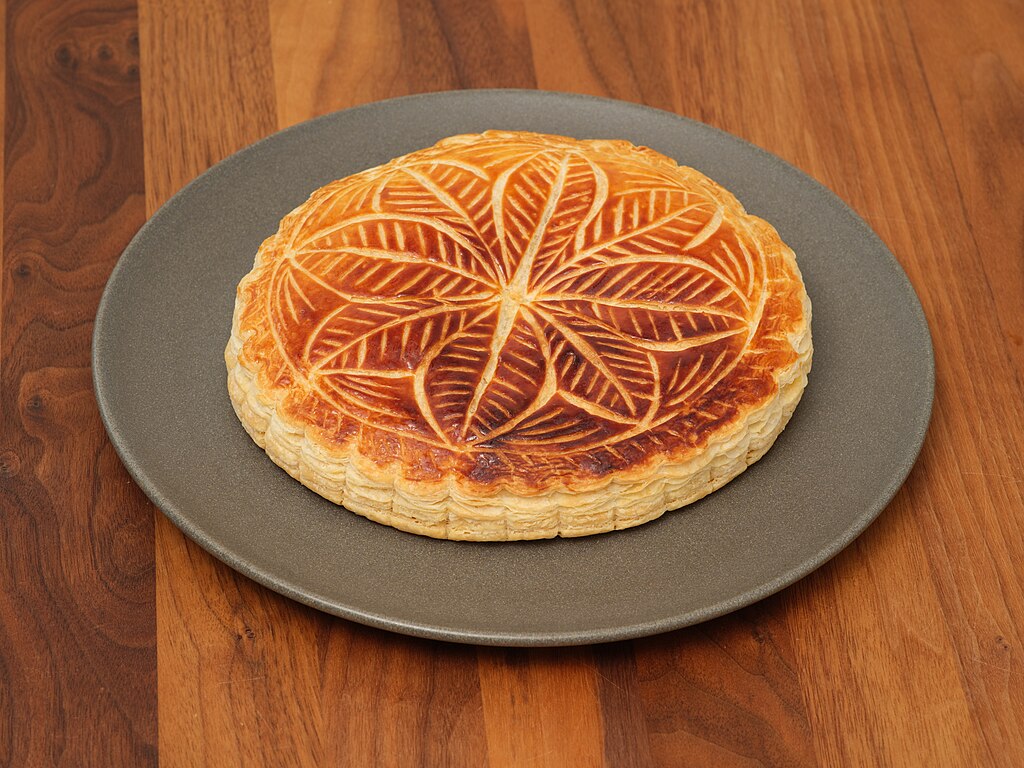
The Galette des Rois is a round, flat cake traditionally eaten in France during Epiphany. At first glance, it looks simple: a golden, flaky pastry, often decorated with delicate patterns carved into the top. But inside, it hides both rich flavors and a small surprise.
The classic version found in most of France is made with two layers of puff pastry filled with almond cream, known as frangipane. The pastry becomes crisp and buttery in the oven, while the filling remains soft, smooth, and slightly sweet, with a strong almond flavor.
Although variations exist, this puff pastry and frangipane combination is the most iconic and widely recognized form of the Galette des Rois. It is typically served at room temperature and shared among several people, not as an individual dessert, but as a cake meant to be cut, divided, and enjoyed together.
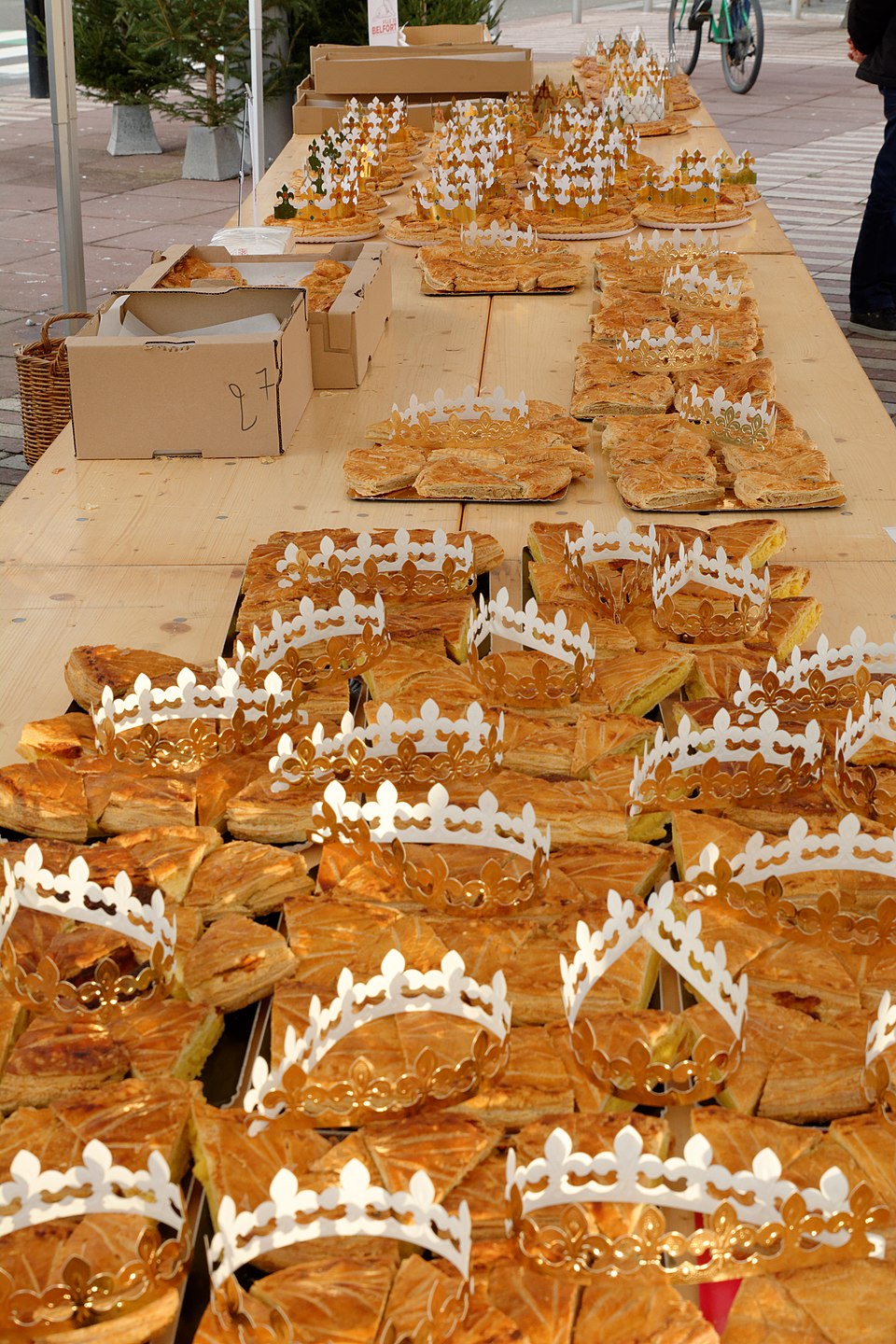
Galette des Rois – Photo by Thomas Bresson on Wikimedia Commons – CC-BY-3.0
The Hidden Charm: La Fève
Hidden inside every Galette des Rois is a small object called la fève. Traditionally baked directly into the cake, this tiny charm is the element that turns a simple dessert into a game of chance. Whoever finds the fève in their slice is crowned king or queen for the day and gets to wear the paper crown that comes with the cake.
The word fève originally means bean, and that is exactly what it was in the past. In medieval times, a dried bean was used as a simple marker of luck. Over the centuries, the bean was replaced by small porcelain figurines, often depicting religious scenes, characters, or symbols linked to the Epiphany.
Today, fèves come in countless shapes and themes: animals, cartoon characters, monuments, regional symbols, or even branded designs created by bakeries. Because of this variety, some people have turned fèves into collectible items. These collectors, known as fabophiles, carefully save and display fèves year after year, sometimes owning hundreds or even thousands of them.
What began as a humble bean has become both a playful tradition and a miniature art form, one more reason why the Galette des Rois remains so popular in modern France.
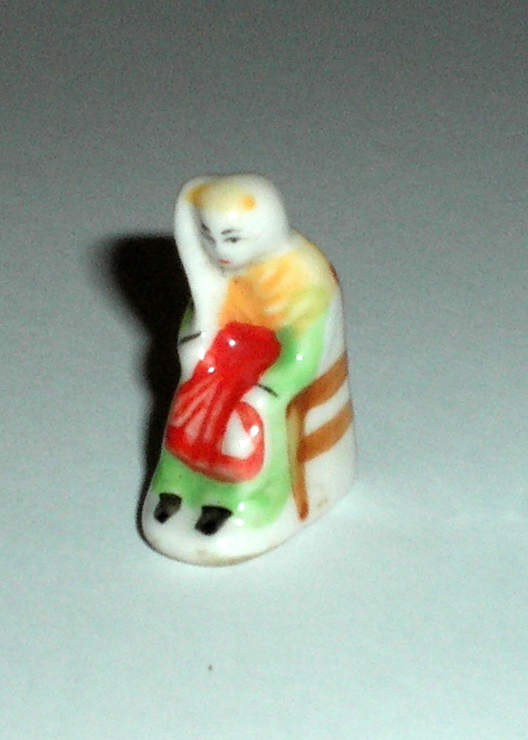
La fève – Photo by Nono64 on Wikimedia Commons – CC-BY-3.0
How the King (or Queen) is chosen
The ritual of choosing the king or queen is just as important as the cake itself. Once the Galette des Rois is placed on the table, it is cut into as many slices as there are people present, plus one extra slice, traditionally called la part du pauvre (the poor man’s share).
To ensure fairness, the youngest person in the group is asked to hide under the table. From there, they cannot see the cake and are asked to name who will receive each slice as the pieces are served. This simple rule removes any suspicion of cheating and adds a playful moment to the gathering, especially for children.
When someone discovers the fève in their slice, the rules are clear: they become the king or queen. The lucky person is then given a paper crown, usually included with the cake by the baker. Traditionally, the crowned king or queen must choose their royal partner, and, in many families or workplaces, they are also expected to buy the next galette.
The crown itself is intentionally modest: made of paper, worn briefly, and never taken too seriously. In France, this short-lived royalty is less about power and more about laughter, shared dessert, and enjoying the moment together.
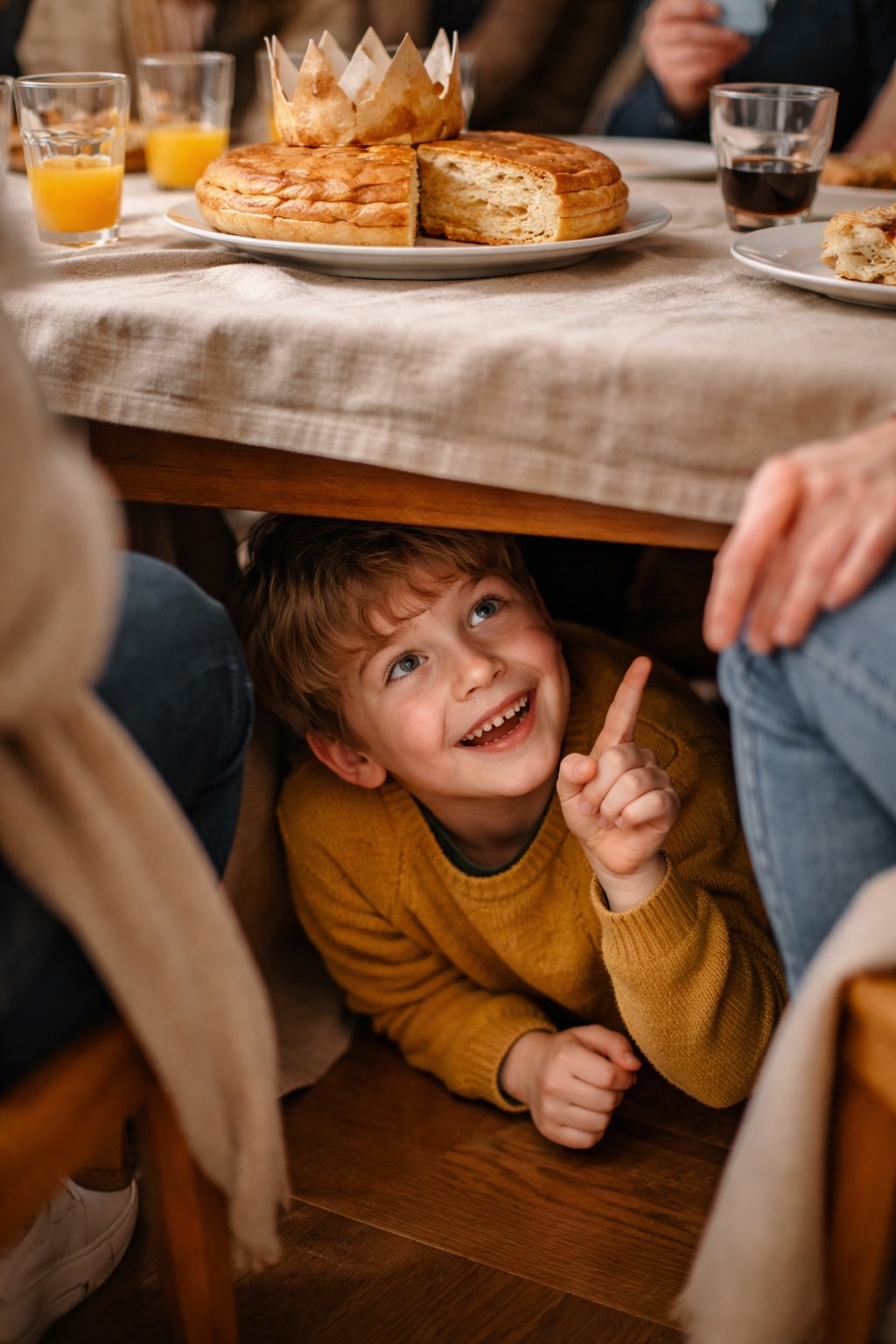
A kid under a table to choose who will get the next slice of Galette
Galette des Rois in everyday French life
In France, the Galette des Rois is not limited to a single day or a single setting. It naturally finds its place in everyday life throughout January, creating repeated moments of sharing and celebration.
At home, the galette is often enjoyed during family gatherings, especially on weekends. It is common for families to eat several galettes over the course of the month, sometimes switching who buys or makes them. Children look forward to the fève, while adults enjoy the ritual as much as the cake itself.
In offices and workplaces, the tradition takes on a social dimension. Colleagues frequently bring galettes to share during breaks or meetings, which often means multiple galettes over several weeks. In many companies, it becomes an informal rule: whoever finds the fève one week brings the next galette, ensuring the tradition continues well into January.
For bakeries, this period is a serious business. Every year, bakers compete to offer the best Galette des Rois, experimenting with flavors, perfecting their frangipane, and refining the decorative patterns on the pastry. Some bakeries even build a local reputation around their galette, attracting long lines and loyal customers eager to compare and choose their favorite.
More than just a dessert, the Galette des Rois is woven into French social life, at home, at work, and in neighborhood bakeries, making January one of the most convivial months of the year.

Colleagues sharing a Galette des Rois
Can You make galette des rois at home?
Yes, and many French people do. Making a Galette des Rois at home is surprisingly accessible, even for beginners. At its simplest, the process involves rolling out two circles of puff pastry, spreading a layer of almond cream (frangipane) on one of them, hiding a fève inside, sealing the edges, and baking the cake until it turns golden and crisp.
That said, homemade does not always mean starting from scratch. In France, it is very common to use store-bought puff pastry, which saves time and delivers excellent results. Some people even buy ready-made frangipane, turning the galette into a quick and easy dessert that still feels festive and traditional.
For families, and especially for newcomers to France, making a Galette des Rois can be a fun way to experience the culture firsthand. Children enjoy hiding the fève and decorating the pastry, while adults appreciate learning a tradition that is deeply rooted in everyday French life. Whether homemade or partly store-bought, the real value of the galette lies less in perfection and more in the shared moment around the table.