Skip to content

France just elected new mayors. Here’s why it matters if you own (or want to own) property here.

On 15 and 22 March 2026, France held its municipal elections, with voters choosing municipal councils across approximately 35,000 communes throughout the country. Nearly 35,000 mayors were elected between the two rounds. In the vast majority of rural France, most mayors ran without any party backing, under an independent “sans étiquette” banner.
For most people, a municipal election is background noise. For anyone buying, owning, or investing in French property, it is anything but.
The mayor of a French commune holds a set of powers that can directly affect what you can do with your home, what it is worth, and how easy, or difficult, life becomes as a foreign owner. Understanding those powers is not a political exercise. It is a practical one.
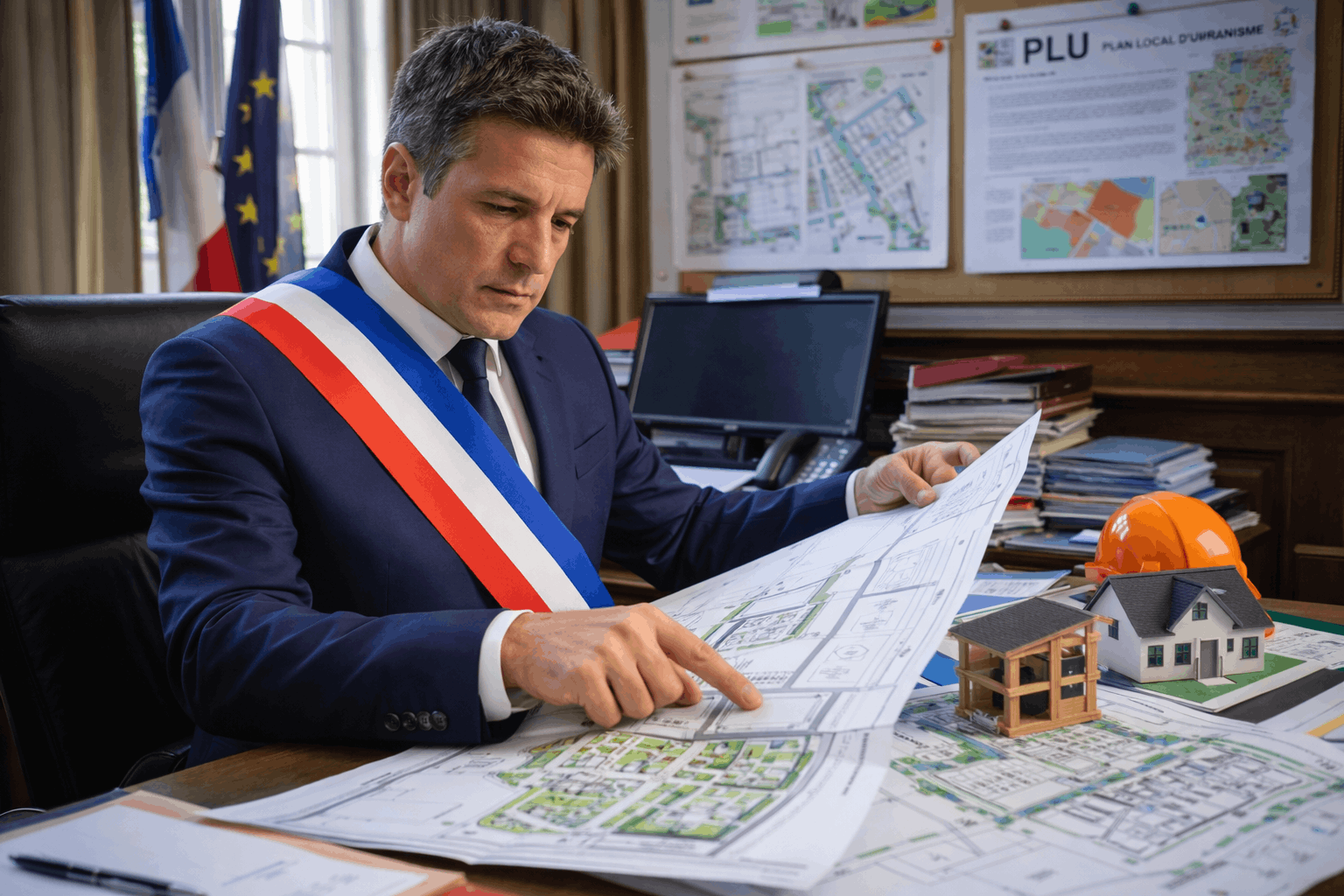
The mayor controls the building permit
Every renovation that changes the exterior of a property, every extension, every new construction, every change of use, all of it passes through the mairie. The mayor, acting through the municipal council, sets the local urban planning rules in a document called the PLU (Plan Local d’Urbanisme). This document determines what can be built where, what styles are permitted, what heights are allowed, and what is simply off the table.
When a new mayor arrives with a different vision for the commune, more protective of heritage, more restrictive on extensions, more cautious about new construction on agricultural land, the PLU can be revised. For buyers planning a major renovation or a barn conversion in a rural commune, the political colour of the local council matters far more than most people realise.
This is not a theoretical risk. Municipalities across France have tightened their PLUs in recent years in response to concerns about rural sprawl, landscape preservation, and the pressures of second-home ownership. A property that appeared to offer straightforward development potential under the previous administration may face new hurdles under the next one.
The mayor has the first right to buy your property
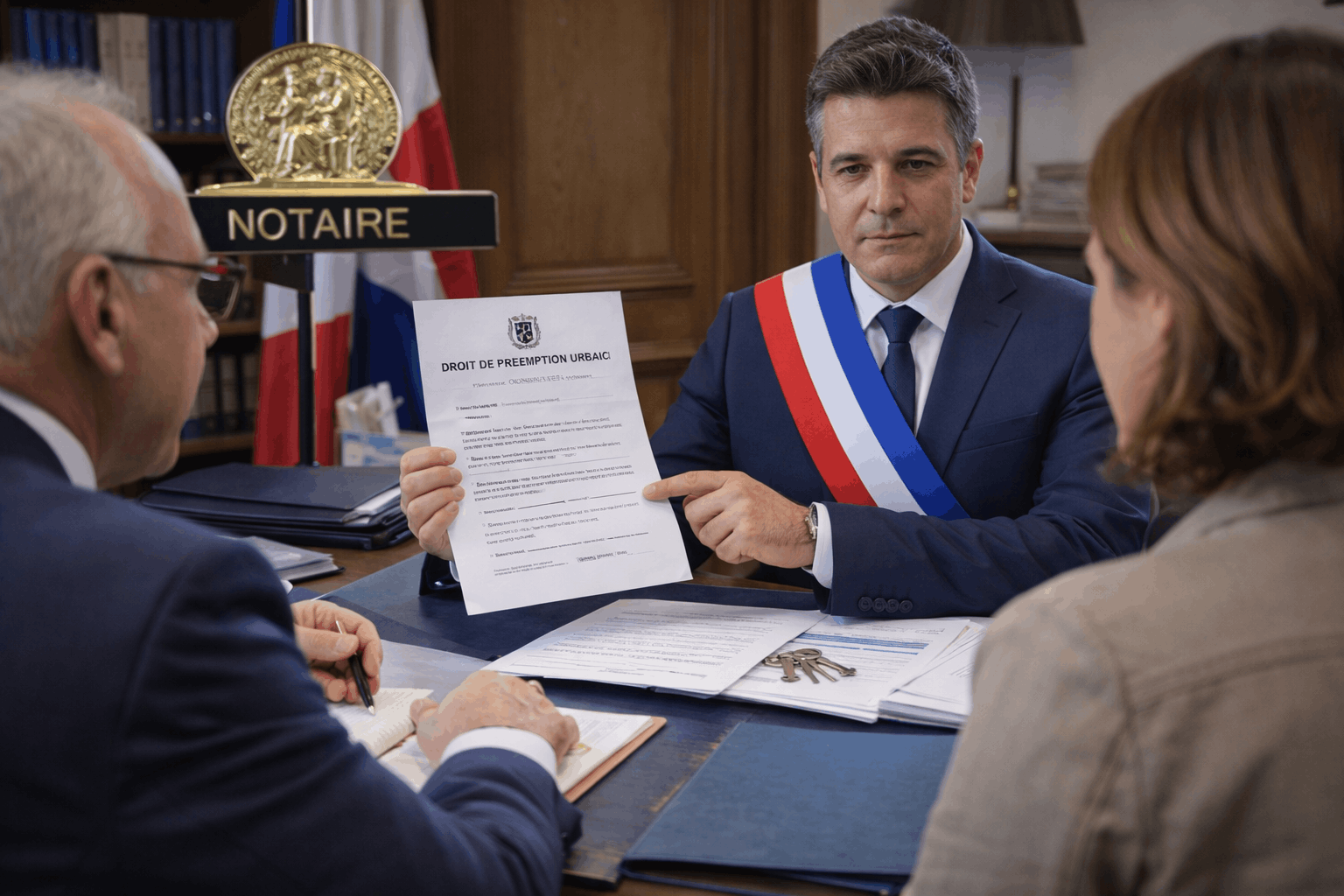
This is one of the least understood mechanisms in French real estate, and one of the most consequential. When a property is sold in a commune, the municipality holds what is called the droit de préemption urbain: the right of pre-emption. In practice, this means that if the mayor decides a property is strategically important for social housing, public infrastructure, or urban renewal, the commune can step in and purchase it at the agreed sale price, effectively replacing the buyer you thought you had.
This right is not exercised on every transaction. In rural areas and small villages it is rarely triggered at all. But in towns that are actively pursuing housing policy goals, particularly those trying to increase social housing stock or regenerate town centres, it is a real factor. Buyers who have spent months finding the perfect property, negotiating the price, and lining up their financing sometimes arrive at the notaire to discover that the commune has intervened.
A new mayor with ambitious housing policies, and the budget to back them, is a mayor who may exercise this right more readily than their predecessor.
The mayor can now limit or ban short-term rentals
This is the issue that matters most to investors, and it has changed dramatically over the past few years.
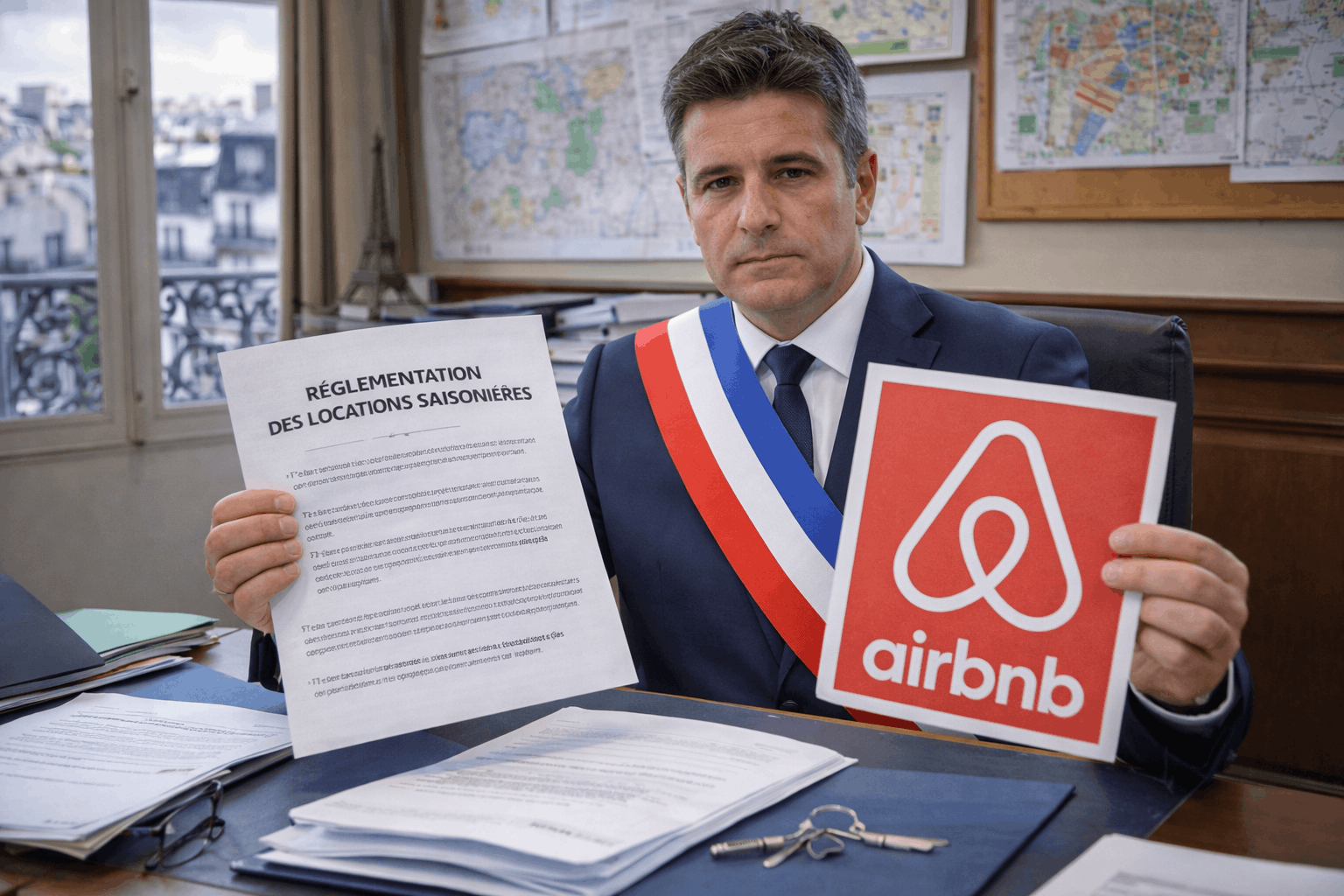
French law gives mayors increasing power over the short-term rental market. Specifically, since the loi Le Meur came into force at the end of 2024, mayors in high-demand areas can restrict the number of nights a property may be rented on platforms like Airbnb, require owners to register their properties, and in some cases impose quotas on the number of short-term rental properties permitted per building or per street.
In some tourist communes, mayors have gone further, establishing zones where short-term rentals require a change of use authorisation: a complex and often expensive administrative process. Paris, which has been applying this kind of restriction for years, provides the clearest example of what assertive local policy looks like in practice. Other cities and coastal towns are watching closely and considering similar approaches.
The mayors elected last week inherit this toolkit. Those running on platforms that prioritise housing affordability for local residents: a concern that drove much of the campaign rhetoric in cities like Paris and Marseille are more likely to use it. If you are buying a property in a popular town with the intention of listing it on Airbnb, the identity of the new mayor is not an abstract consideration. It is central to your business model.
The mayor influences local taxes

The taxe foncière, the annual property ownership tax paid by all property owners in France, is set partly at the national level and partly at the local level. Municipal councils vote on a multiplier that determines how much owners in their commune pay on top of the base rate. Over the past decade, taxe foncière increases have been significant in many areas, and local political decisions have been a driving factor.
A new municipal team that inherits a budget deficit, faces infrastructure investment needs, or has made promises around local services may see adjusting the taxe foncière as one of the levers available to them. This does not mean rates will automatically rise under a new mayor, but buyers who plan to hold a property for six years or more (the standard term for a new municipal mandate, possibly seven this time around given speculation about a 2033 postponement) should factor local fiscal policy into their thinking.
What this means if you are searching now
None of this should discourage a purchase. France has 35,000 communes, and the vast majority of new mayors, particularly in the rural areas where the most affordable properties are found, are independents with pragmatic, local priorities rather than ideological ones. The political battles that made headlines in Paris and Nice are largely irrelevant to someone buying a farmhouse in the Creuse or a village house in the Lot.
But for buyers looking at properties in tourist zones, coastal towns, ski resorts, or any commune where the housing market is under political pressure, checking the new municipal programme is a worthwhile step. Town halls in France publish the mandate commitments of elected councils. Reading them, or asking a local adviser to interpret them, takes an hour and can clarify a great deal.
Property in France remains one of the most attractive propositions for foreign buyers anywhere in Europe. The legal framework is solid, the rural stock is extraordinary, and values in many regions remain genuinely reasonable. The municipal elections do not change any of that. They do, however, change who holds the keys to several decisions that will shape your experience as an owner over the next six years.
Knowing who that is, and what they intend to do, is simply good preparation.
Thinking about buying in France? Browse our current listings or explore our guides to understand the full purchase process before you start.