Skip to content

Mardi Gras in France: How the French celebrate carnival before lent
If you happen to be in France in late winter, you might notice something lively and colorful starting to pop up in towns and cities: parades, costumes, masks, music… and lots of sugar. This festive period is known in France as Mardi Gras: a celebration of indulgence, community, and tradition before the solemn season of Lent begins. Let’s explore what Mardi Gras is, how it’s celebrated across France, and why it’s one of those cultural moments you won’t want to miss.
What is Mardi Gras?
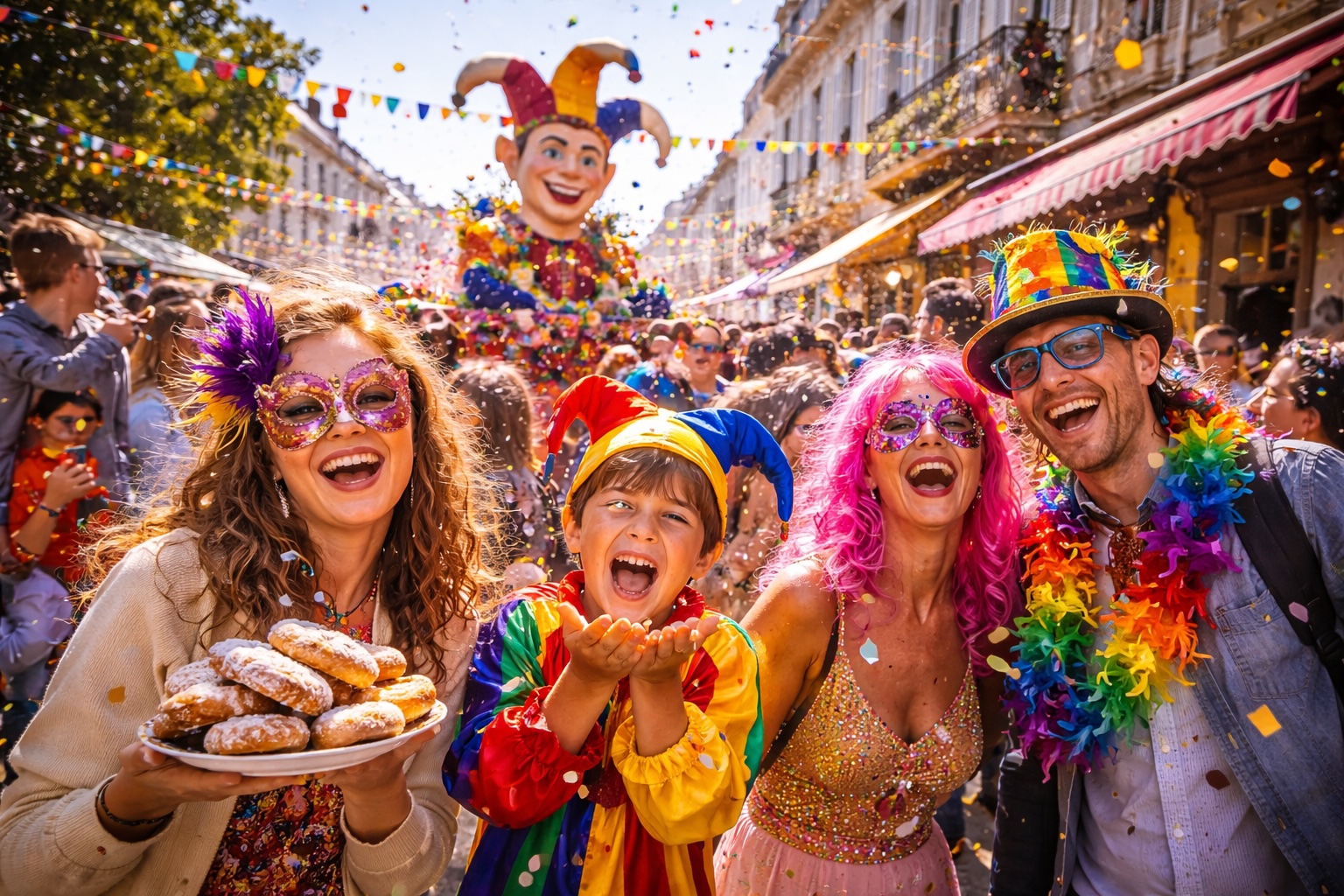
“Mardi Gras” literally means “Fat Tuesday” in French.
It’s the final day before Ash Wednesday, which marks the beginning of Lent: a 40-day period of fasting and abstinence in the Christian calendar. Traditionally, people used this day to use up rich foods like eggs, butter, and sugar before the fasting period began.
Today, in most of France, Mardi Gras is less about strict religious rules and more about community celebration and having fun together.
When is Mardi Gras?
Unlike fixed holidays, Mardi Gras changes every year.
It always falls 46 days before Easter: typically sometime between early February and early March. Because the date moves, many towns and cities use this as an excuse to plan parties and events throughout the weeks leading up to it.
This means that if you’re visiting France in winter, even outside of the big cities, there’s a good chance you’ll bump into local Mardi Gras celebrations!
Traditional food: it’s all about sweet treats
One of the best parts of Mardi Gras in France is the food.
Some classic treats you’ll find include:
- Beignets: French doughnuts, often dusted with sugar
- Bugnes: thin, crispy fried pastries common in Lyon and the Rhône region
- Mardi Gras pancakes: similar to crêpes, but richer and sweeter
Every region seems to have its own version of the “Fat Tuesday treat,” and many French families make them at home during the period leading up to Mardi Gras.
Carnivals and parades across France
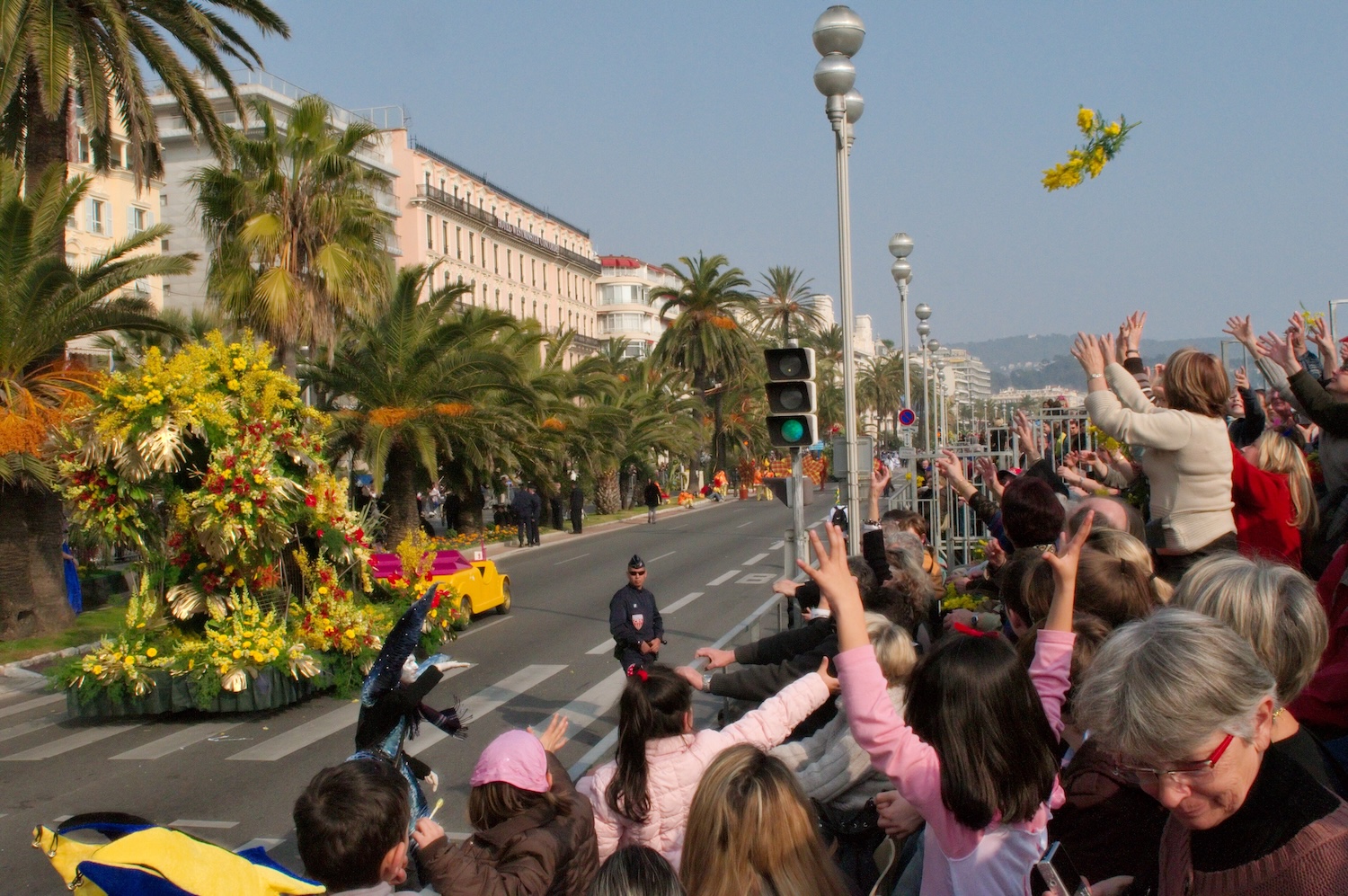
Photo by Zil – CC BY-SA 3.0
While people across France enjoy the traditional Mardi Gras treats, the festive spirit is especially strong in certain parts of the country. In Nice, the famous Carnival is one of the largest and most spectacular celebrations in France, featuring giant floats, live music, and thousands of participants filling the streets. Paris also takes part in the tradition, though in a more low-key way, with smaller parades and local events often organized within neighborhoods that have a strong sense of community.
In many Provençal towns, Mardi Gras remains deeply rooted in local traditions. Smaller communities host masked balls, costumed parades, and evenings of traditional music, creating a more intimate but equally lively atmosphere. In these places, Mardi Gras feels less like a tourist event and more like a shared local celebration.
Wherever the carnival tradition is strong, it brings together people of all ages. Children proudly wear their costumes, towns invest time and creativity into building floats, and entire communities gather in the streets to watch, celebrate, or take part themselves.